Neck and Back Massage for Desk Workers: What It Does and How to Choose
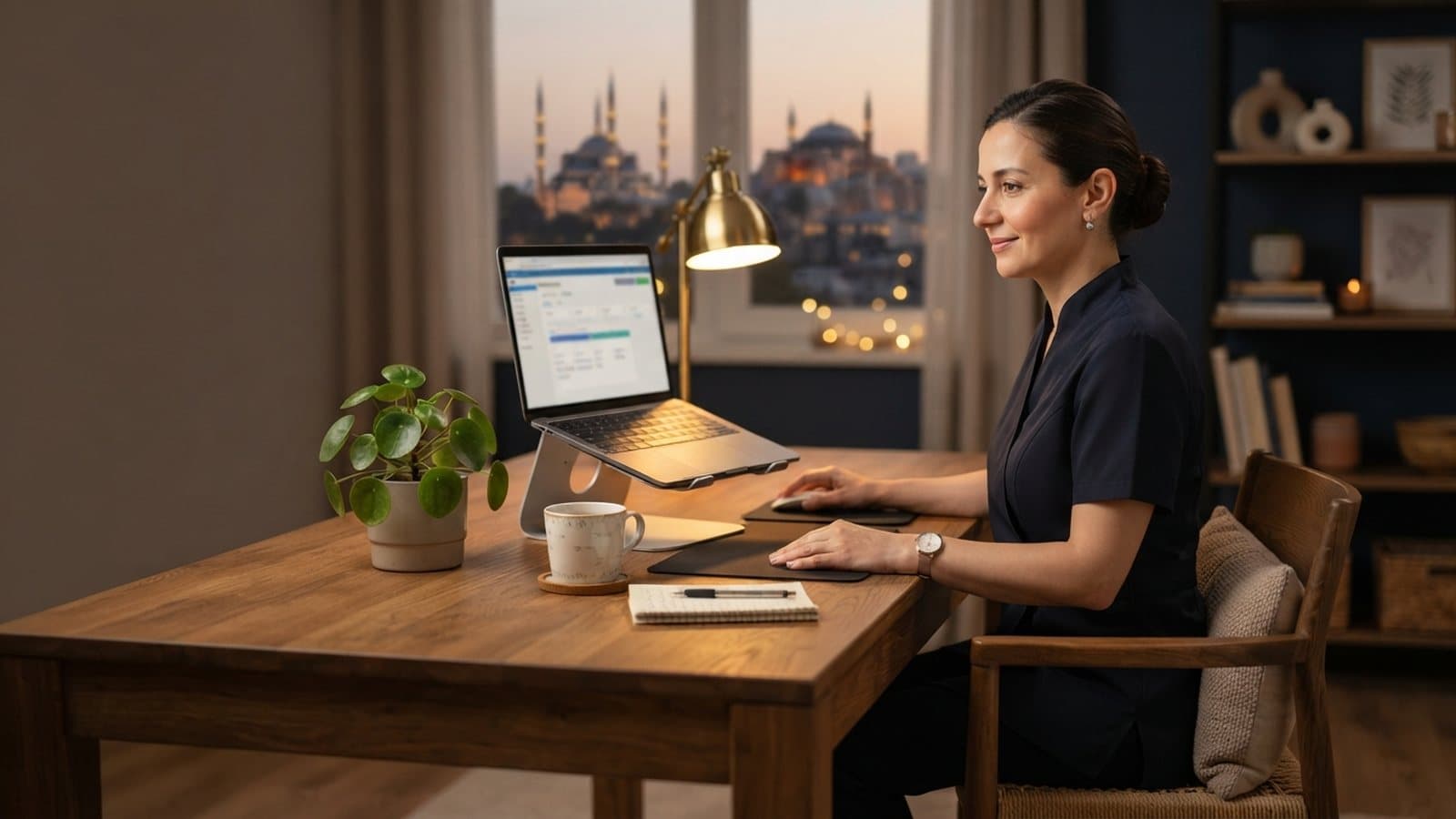
For neck and back tension in desk workers, massage can bring short-term relief, but the evidence is limited and the benefits are mostly short-lived. The most sensible way is to think of massage together with changing position, regular movement and a good desk setup.
Why do desk workers get neck and back tension?
Neck and back tension mostly comes from staying in the same position for a long time and from a desk setup that does not fit your body. The NHS recommends avoiding staying in one position for a long time, for example at a desk, and sitting upright. Cleveland Clinic notes that muscle tension from sitting at a laptop or leaning forward can be targeted with deep tissue massage.
The height of your screen, your chair and the position of your keyboard and mouse decide how your neck and shoulders are loaded. So massage is not a solution on its own but one part of the setup.
Does neck and back massage help desk workers?
Massage can give short-term relief for neck pain, but the evidence is limited and the benefits are short-lived. The U.S. National Center for Complementary and Integrative Health (NCCIH) reports that massage may bring short-term benefit for neck pain, but that a 2012 Cochrane review concluded no recommendation for practice could yet be made. In a study summarized by NCCIH, 60-minute sessions given several times a week were reported to give better results than shorter and less frequent sessions.
NCCIH also says the evidence supporting massage for low back pain is weak. So it is more realistic to think of massage not as a "fix" but as a supporting tool alongside movement and a good setup.
Which massage type and length suit desk workers?
For desk workers a short, focused session or classic massage is usually enough to start with; the type and length are set by your needs.
| Option | Usually suits | Note |
|---|---|---|
| A short session focused on the neck and shoulders | Tension in one area, during a work break | Not a full-body session |
| Classic (Swedish) massage | General relaxation, a first experience | Medium pressure is common |
| Deep tissue massage | Ongoing tension in a particular muscle | There can be more muscle soreness the next day |
| A 60-minute session | Working the neck, shoulders and back together | The most common starting length |
To see the options in detail, you can look at the classic (Swedish) massage article and the deep tissue massage article. The article on 30, 60 and 90 minute sessions guides you on length. At the start of the session, tell your therapist where you feel tension, when the pain started and how much time you spend in front of a screen during the day. Muscle soreness is possible after a session; see the aftercare article.
What can you do in the office instead of a massage?
In addition to massage, changing your desk setup and habits can help reduce the load on your neck and back. The U.S. Occupational Safety and Health Administration (OSHA) recommends that the top edge of the monitor be at or slightly below eye level, that the head and neck stay in line with the torso, that the shoulders be relaxed and the feet flat on the floor. The same source says there is no single ideal posture for everyone and that you should adjust the setup to yourself.
- Bring the top edge of the monitor to eye level or slightly below.
- Put your feet flat on the floor and support your lower back.
- Keep your wrist and forearm in line, and leave room for the keyboard and mouse.
- Change position and stand up at regular intervals. The NHS recommends not staying in one position for long.
- According to the NHS, gentle neck exercises can be done to keep the neck mobile.
- Do not strain your neck while sleeping either. The NHS recommends keeping the head in line with the body, using a low, firm pillow and not sleeping on your front with your neck twisted.
The NHS also says neck pain usually lasts a few weeks and that keeping the neck moving is better than wearing a neck brace. For heat it says a wrapped hot water bottle can be used for about 20 minutes, or a wrapped bag of frozen food for about 5 minutes. If your discomfort continues, see a doctor.
How do you combine the interval between massages with an office routine?
If you want to make massage part of a regular routine, set the frequency by your budget, your schedule and how your body responds. In the study summarized by NCCIH, sessions given several times a week gave better results for neck pain, but that applies to research conditions; the evidence is limited and there is no schedule that suits everyone. In practice you can start with a session every two or three weeks and see how your body responds.
Between sessions, keep up your desk setup and movement habits. Standing up at short intervals during the day to do shoulder and neck movements, bringing the screen to eye level and not staying in one position for long can support the effect of the session. Massage does not replace these habits.
What should you tell the therapist before a session?
It helps to share certain information so the therapist can adjust the session to you. Tell them which area is tense, how long it has lasted, how the pain changes through the day, whether you spend long periods in front of a screen and any previous injuries. If you have numbness or tingling in your arm, say so in particular and do not neglect to see a doctor.
During the session you can set the pressure as light, medium or firm and say right away when you are uncomfortable. If you feel muscle soreness afterwards, drinking water and moving gently can help.
When should you see a doctor for neck and back pain?
If the pain lasts longer than a few weeks or other symptoms come with it, you should see a doctor. The NHS recommends going to a doctor if neck pain or stiffness lasts longer than a few weeks, painkillers do not help, you are worried about the pain or you have other symptoms such as tingling or a cold arm.
Massage should not be used to put off seeing a doctor about a health problem. NCCIH stresses this in particular.
How do you find a therapist on Masöz as a desk worker?
You can compare profiles by the district close to your workplace or home. For districts with many business centers such as Şişli, you can look at the Şişli massage guide and the Şişli massage therapists page. The badges rest on the editorial team's review, not on user comments, and the criteria are explained on the How We Verify page. The price is stated on each profile; we explained the factors in the price article. Masöz is not an intermediary; pay in person at the time of the service.
Sources
- Massage Therapy for Health: What the Science Says, NCCIH, U.S. National Institutes of Health (2018-12). Accessed: October 10, 2026
- Massage Therapy: What You Need To Know, NCCIH, U.S. National Institutes of Health (2019-05). Accessed: October 10, 2026
- Types of Massage Therapy to Try, Cleveland Clinic (2021-04). Accessed: October 10, 2026
- Neck pain, NHS (UK National Health Service) (2023-04). Accessed: October 10, 2026
- eTools: Computer Workstations, U.S. Occupational Safety and Health Administration (OSHA). Accessed: October 10, 2026
Frequently Asked Questions
Which massage type suits desk workers?
Short neck and shoulder sessions focused on one area, or classic massage, are usually a good start. Deep tissue massage may also be chosen for ongoing tension in a particular muscle. Discuss your preference with the therapist.
How many minutes should a neck and back massage last?
30 minutes for a single area, and 60 minutes for working the neck, shoulders and back together, are common options. Decide the length with the therapist according to your needs.
Does massage help with neck pain?
NCCIH says massage may bring short-term benefit for neck pain but that the evidence is limited. Think of massage together with movement and a good desk setup; if your pain continues, see a doctor.
What should a good desk posture look like?
According to OSHA, the top edge of the monitor should be at or slightly below eye level, the head and neck in line with the torso, the shoulders relaxed and the feet flat on the floor. The NHS recommends not staying in one position for long.
When should I see a doctor for neck pain?
According to the NHS, see a doctor if the pain or stiffness lasts longer than a few weeks, painkillers do not help or there are other symptoms such as tingling.
Related Pages
Editorial team
Masöz editorial team
The Masöz editorial team prepares the guide articles, checks them together with their sources and keeps them up to date. The articles are for information only and are not a substitute for medical advice.
All articles by this authorThis article was translated from the Turkish original and checked by our editor.